We Should Mulch the Land
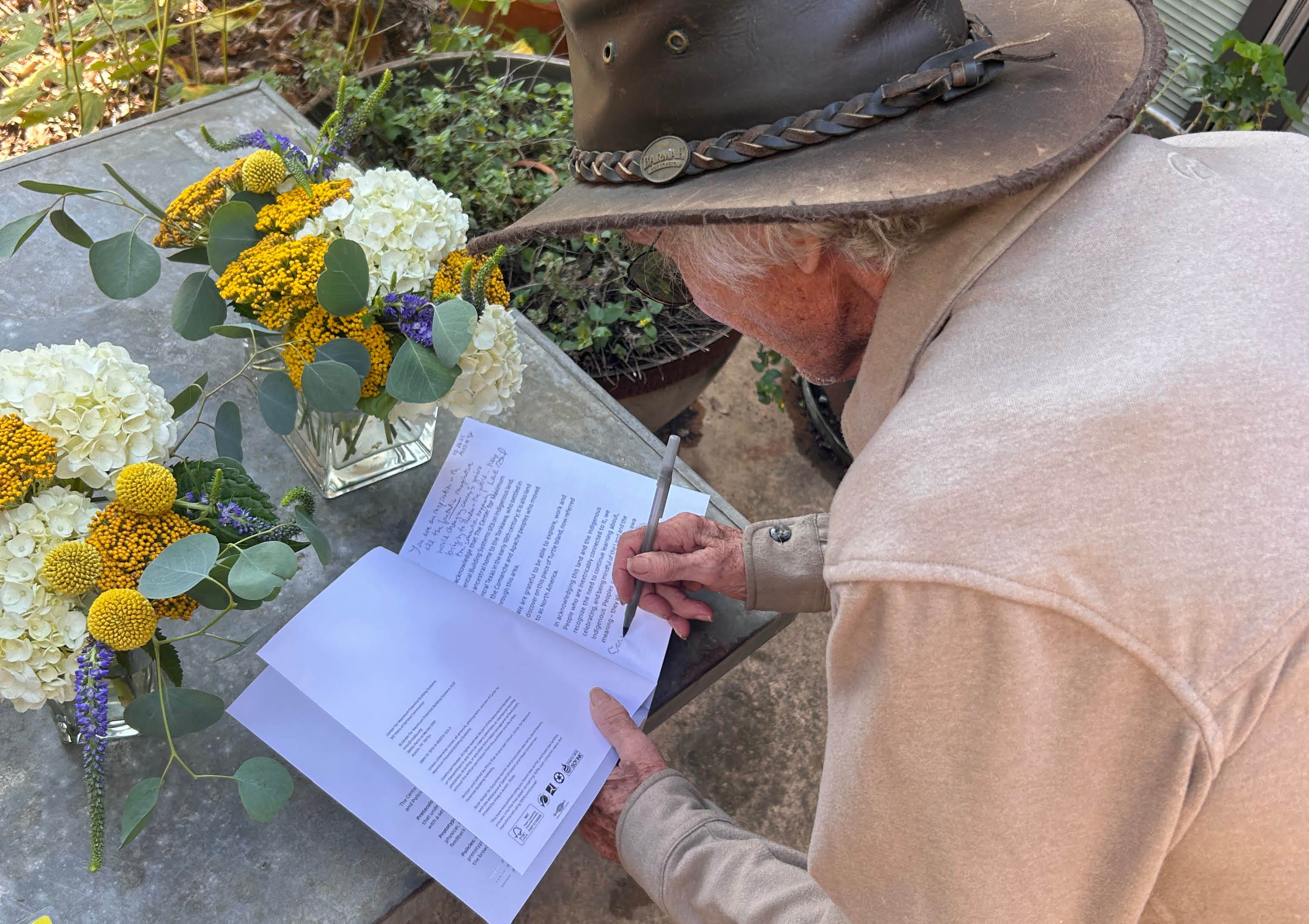
An essay written for my mentors, Pliny Fisk III and Gail Vittori

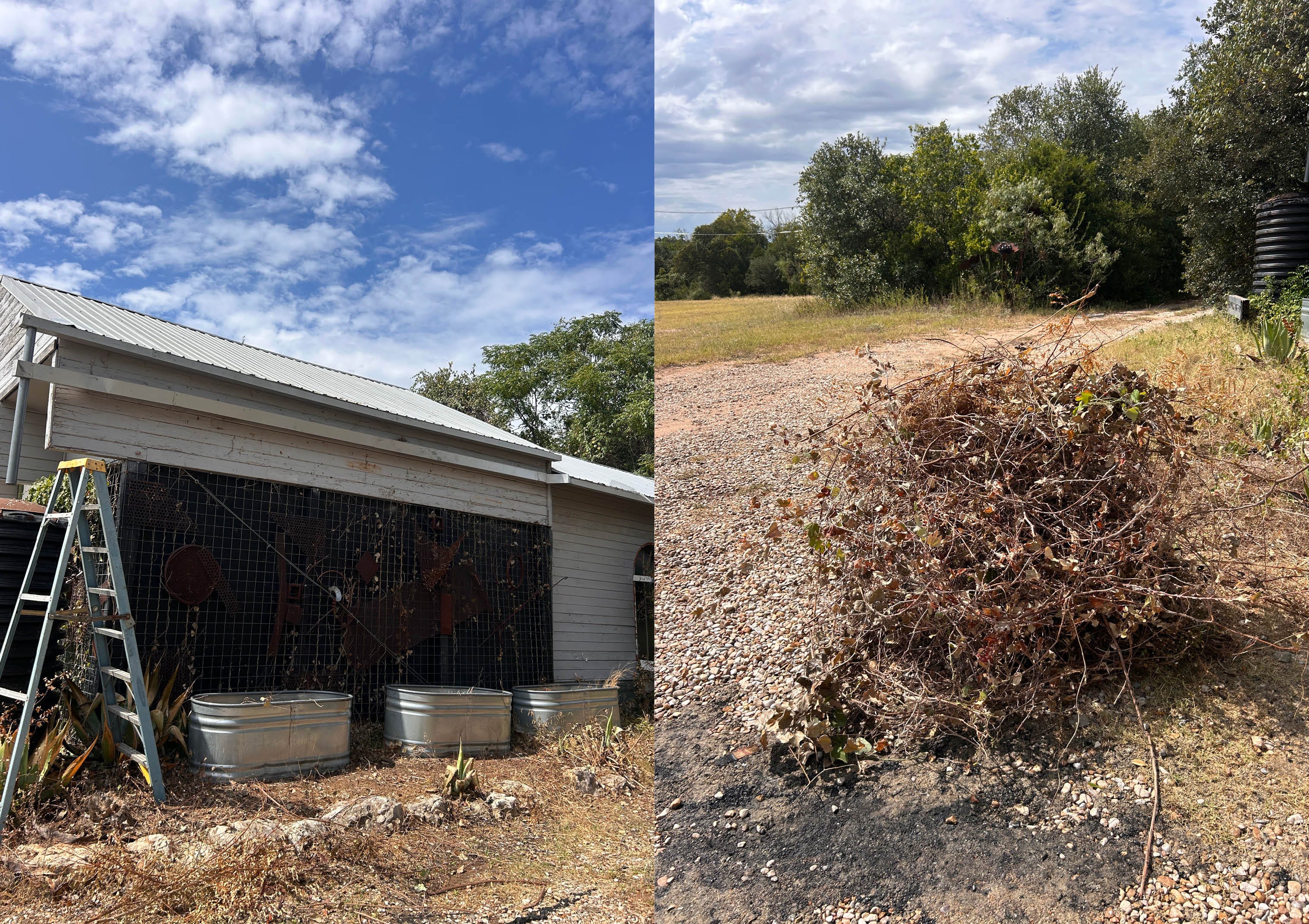
On my most recent Sunday at the Center we gathered to plan the upcoming bioregional confluence, and afterwards stayed to do yard work. Zane, 28, a water conservation advocate; Kiran, 25, a systems engineer; and myself, 28, a freshly licensed architect—were there to contribute labor because we love Pliny and Gail. We worked in the full beat of the August sun, pulling shriveled vines off the wall. “What’s wrong with TCEQ?” I asked Zane, in reference to her work to prevent new data centers from sucking the aquifers dry. “They’re still so focused on a progressive ideal, as if we need to keep developing Texas…” I took a machete to one of the stems and hacked it down. Kiran said something about strange loops and went to grab Coronitas. In that moment specifically, and always, there was tension at the Center between what is rational and what is utopian.
The structural designs of the buildings at the Center are straightforward, but the concepts have been provoking since day one. Recently I heard Gail explain to a crowd how the Center is designed for each occupant to need less than twenty five gallons of water per day, while the average Texan still uses ninety two gallons per day in regular buildings.
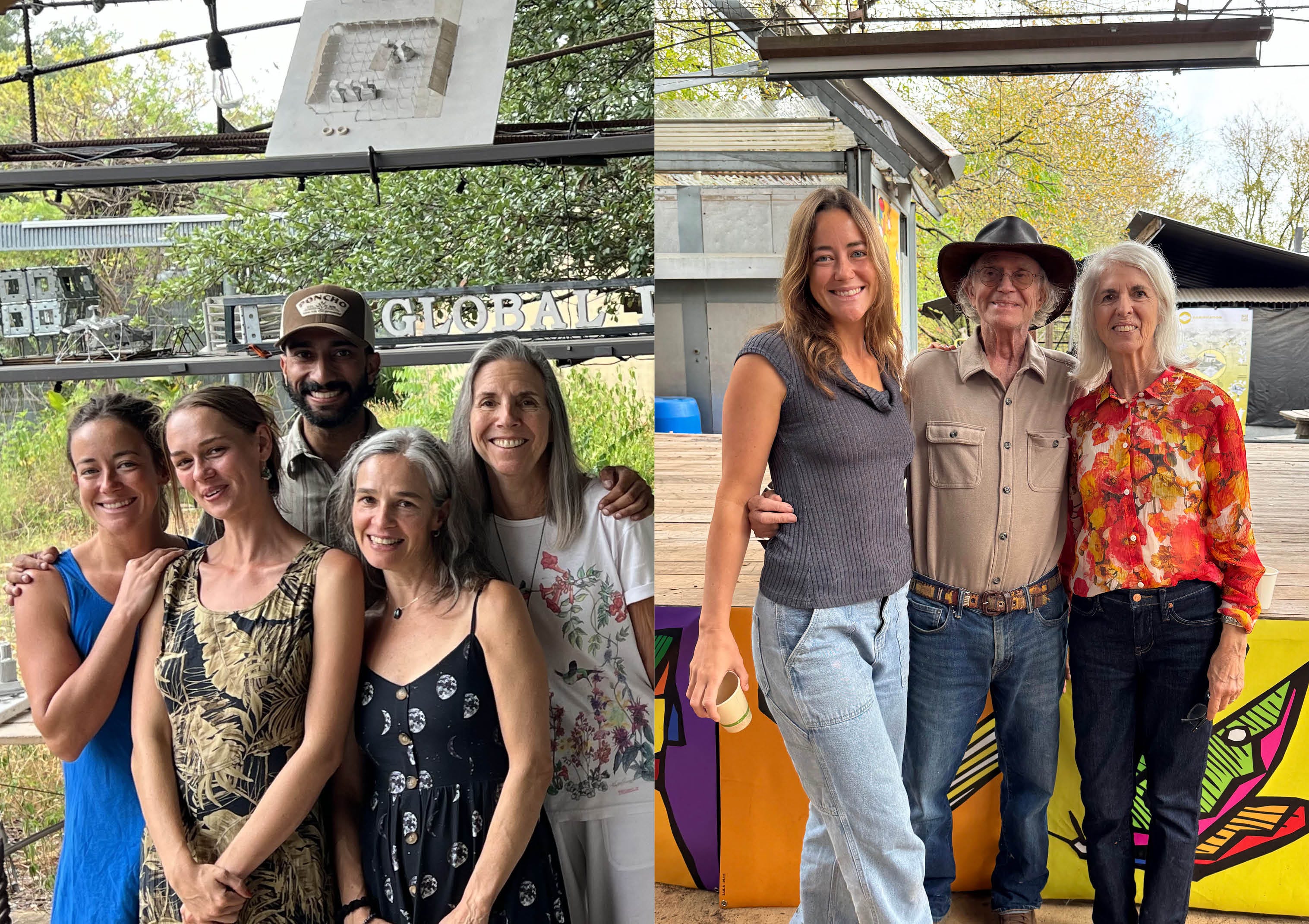
When I started as an intern at the Center, I had no framework for how to design, and so the internship shaped me with a heavy hand. Pliny and I investigated modular, adaptable, and deployable architecture for disaster relief, and we were really into Sou Fujimoto’s work visually. What resulted was a forest of grids, with different tools for living suspended like Christmas ornaments. In the four months I spent as an intern, I was given the opportunity to draw and iterate for eight hours every day, continually guided by Pliny in the direction of the concept. I also did fun random tasks like calling to get quotes for decommissioned oil rigs.
Eight years later, as a newly minted architect, I now believe that people who design regular buildings are misguided and that we don’t need to use our air conditioners. Something strange yet wonderful happened to me at the Center in my formative years. The Center is a place for learning in many modalities. You can ingest countless drawings and concept models, build prototype structures, or peruse a library ranging from solar punk manuals to USDA reports on cutting energy costs. Students of various disciplines cycle through the Center: geographers, architects, mathematicians, inventors, and musicians. I imagine at least one thousand internships have taken place there, no two the same, thanks to Pliny’s stunning ability to educate. He earnestly understands students as individuals and beckons them to join him in creating “commotion”. It’s fun like the Cacophony Society: “You may already be a member…”
After the internship, I tried to find commotion in the regular working world, but to little avail. In my first 9-to-5 position, the dad with the desk next to me said, “You shouldn’t be here, you’re too young, I imagine you frolicking in a field of wildflowers.” He was right, and a variety of experiences led me to establish an architecture practice focused on biomaterials, many of which can be found in chunky samples underneath the quonset at the Center. Some days I am on a flight to LA with a chunk of hemp composite as my personal item, to explain to the plan reviewers that we want to build a house from the rubble of agriculture. I like the space I am carving in the design world. My buildings may not be “hot” or alluring in terms of their form, but I am really proud of the concepts exhibited.
When I think about the Center and its future, I think about how its buildings were made with intention, over decades, to be easily disassembled. If you look closely at the tectonics: fasteners are removable, materials are recyclable, and some even decompose gracefully in place. The Center has purposefully left a light mark on its twenty seven acres, standing as a beacon on the edge of Austin while other human developments pillage the ecology of the region. Zane told me someone is making plans to build a pipeline for water from northeast Texas all the way down to Hays County. How can this be? It’s time to question progressive ideals in development. The world needs environmental stewards more than ever. We must be reminded of the knowledge we already have. That if we mulch the land, rainfall could seep slowly back into the earth and replenish our groundwater in place, and we wouldn’t need to build the pipeline. Rational practice turns utopian systems into resilience. The Center is a testing ground.
As the next fifty years of the Center take place in Austin, we will continue to stay late and do the yard work, because we love Pliny and Gail. But the systems described at the Center are also carried out into the world in the minds and hands of the thousand interns, and every visitor who has attended a Friday open house. Outside of those twenty seven acres in Austin, the commotion will also continue in every city, project, and conversation that boasts an alumni of the Center for Maximum Potential Building Systems.